Showing posts with label site-seeing. Show all posts

Saturday, 25 July 2015

Bundi - Rajasthan - India


Rajasthan, the combination of two Hindi words (1) King  (2) Place, means Place of Kings. Before becoming Rajasthan, it was scattered in many small states ruled by different kings of their time. All these states were united by Mewar's Rana's and turned it into a whole big state of India as Rajputana (Rajasthan).
There are so many heritage sites and places which you would like to visit.


बूंदी (Bundi): 

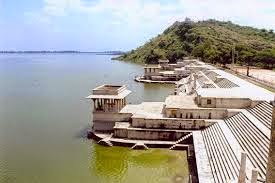
                    Bundi is a district near Kota District and is famous for its monuments listed below. Bundi comes in the Hadoti region (हाड़ोती क्षेत्र). As per 2011 census, population of bundi is more than 1 lakhs. City is encircled by Aravali hills from three sides and it most famous for its step-wells (बावड़ी) specially for rainy days.

                   It was named (Bundi) due to the ruler 'Bunda Meena' of the area, Earlier it was know as Bunda_ki_Naal, means Narrow Way of Bunda. Later on Hada King Rav Deva (राव देवा हाडा) rules the place after defeating Jaita Meena (जैता मीणा), and he named the surrounding area of Bundi as Hadoti (Means places of Hada Raja's). Site Seeing places at Bundi are as below.

  1. Taragarh fort:
                  Taragarh fort is situated at top of the hill overlooking the city. Hill is very steep. Earlier it was known as Bheem Burg (भीम बुर्ज) and a Big size canon was placed there named Garh Gunjam / गर्भ गुंजन (Means thunder from womb). 

  2. Bundi Palace: 
                  Situated adjacent to Taragarh Fort on the same steep hill. There is a art gallery called by name of Chitrashala (चित्रशाला), that is open for general purpose and is famous for  its wall paintings done by water colors. Badal Mahal.

  3. Step-wells of Bundi:
              There are around more than 50 step-wells in Bundi, of which only one have been maintained. They used to be the only source of water for the town until a pipe lined water system was introduced. After that these step-wells were abandoned and the monuments were left without care. Most of the former step-wells inside the town have become dumps for garbage and are slipping out of the public consciousness.


Jaisalmer - Rajasthan - India

Rajasthan, the combination of two Hindi words (1) King (2) Place, means Place of Kings. Before becoming Rajasthan, it was scattered in many small states ruled by different kings of their time. All these states were united by Mewar's Rana's and turned it into a whole big state of India as Rajputana (Rajasthan). There are so many heritage sites and places which you would like to visit.

Jaisalmer:
                Majority persons of Jaisalmer are of Bhati Rajput Kin.  Former Jaisalmer Ruler Kings were related to Chandravansi Yadu Rajput family. The Sixth Successor of Bhati Dynasty After Deoraj Bhati, took over the charge of kingdom and formed Jaisalmer and the Jaisalmer fort in 1156 on Trikuta Hills, which is also known as Sonar garh Fort or Sonar Qila. For the maintenance of the fort, he started recovering taxes from persons bypassing with camels from nearby roads/ways.

               Jaisalmer is not only the prime location for visitors but also for Bollywood industry. Many ads films and movies had been shot here from which some as below. 
         1.   Kachche Dhage
         2.   Krishna
         3.   Sarfarosh
         4.   Tushion
         5.   Rudali
         6.   Coca Cola, BoroPlus and Pepsi and Hero Honda's Ads films
                 L aden with exotic spices and precious silks, these trading caravans were en route to cities like Delhi or Sindh, but had to pass directly through Jaisalmer. This strategic location continued to serve Jaisalmer well, as it lay right on the two main routes connecting India with Persia, Egypt and farther west. He later made it his capital as he moved from his former capital at Lodhruva (which is situated about 15 km (9.3 mi) to the north-west of Jaisalmer). In 1293, the Bhattis so enraged the Sultan of Delhi Ala-ud-din Khilji that his army captured and sacked the fort and city of Jaisalmer, so that for some time it was quite deserted. Some Bhatti's from the Royal family migrated to Jaisal (Now in Pakistan), a place near to Chiniot Distt and some migrated to Talwandi, now Nankana Sahib in Distt. Nankana Sahib (Punjab, Pakistan) and others settled in Larkana (in Sind, Pakistan) under the name of Bhutto. In Nankana Sahib, the Bhatti Clan can be traced from the lineage of Rai Bhoe and Rai Bular Bhatti. After this there is nothing to record until the time of Rawal Sahal Singh, whose reign marks an epoch in Jaisalmer's history in that he acknowledged the supremacy of the Mughal emperor Shah Jahan. Following the collapse of the Mughal Empire in the 18th century, Jaisalmer, like the rest of Rajputana, became subservient to the Marathas,[4] until it came under the protection of the British East India Company following the British victory in the Third Anglo-Maratha War. In 1818, the Rawals of Jaisalmer signed a treaty with the British, which protected Jaisalmer from invasion provided it was not the aggressor and guaranteed the royal succession.                                                                                                                               
  • Sand Dunes:         A dune is a hill of sand built by either wind or water flow. Dunes occur in different shapes and sizes, formed by interaction with the flow of air or water. Large dune fields are known as ergs. Sand dunes, Moving from one place to other in few minutes with the flow of air. In the summer, so fast moving hot air is called 'Loo'. Most kinds of dunes are longer on the windward side where the sand is pushed up the dune and have a shorter "slip face" in the lee of the wind. The valley or trough between dunes is called Dhore.  A "dune field" is an area covered by extensive sand dunes.  
  • Gadsisar Lake:            Gadsisar Lake was Excavated in 1367 by Rawal Gadsi Singh, it is a scenic rainwater lake surrounded by the small temples and shrines of Amar Sagar. Earlier, this lake was used to be the main water source of Jaisalmer. Water pond in middle of desert.  Bollywood Movie 'Nanhe Jaisalmer' was filmed mostly on this lake. 
  • Sonar Quila/ Jaisalmer Fort:
                 This is the most famous place and monument being visited in this deserted city of the state, because Its made of yellow stones and sands without calcium carbonate. This is the special and unique thing about this fort that how without cement or concrete, this is standing in high speed wind flowing area/desert and from the years and years ago (constructed nearly 858 years ago). More than 1200 houses are there inside the fort. This fort seems like honey golden fort at the time of sun set. So beautiful to watch this golden fort made in middle of desert. That's why its called Sonargarh (golden fort). it is also known as the Sonar Quila or Jaisalmer Fort.  There are ninety nine Burj (towers). where canons are placed to safe-guard the fort from invaders. These canons can be seen at present time also.
       
                Situated at a height of 250 feet and surrounded by 30 feet high walls, the face of the fort is not visible to others. Any one trying to observe the face of the fort from any side, they got deceived by its architecture and till they got the right entry gate, they were attacked to defeat or run away.
              It is one of the largest fortifications in the world and included in world heritage by UNESCO. It is situated in the city of Jaisalmer, Rajasthan. It is a World Heritage Site. It was built in 1156 AD by the Rajput ruler Rawal Jaisal, from whom it derives its name. (Rawal Jaisal's son was Shalivahan II; Manj and Bhati Rajputs are descended from him. The fort stands in the middle of the sandy expanse of the great Thar Desert, on Trikuta Hill, and has been the scene of many battles. Its massive yellow sandstone walls are of a light brown to brownish orange color during the day, fading to honey-gold as the sun sets, thereby exploit the natural surroundings to disguise something the fort in the yellow desert.  The fort is located in the very heart of the city, and is one of the most notable monuments in the locality.
               Many Jain temples are inside the fort and tourism  is the second profession in the city after stones business.
  • Lakshminath's Temple: 
                There is temple of god Krishna, which is known as God Lakshminath Temple. A very attractive marble image of god Krishna attracts every one. It is believed that once, In Jaisalmer, a bad famine happened, The king then placed his sword at the feet of lord Krishna's Statue in the temple and take an oath, that till the famine deminishes, he will not pick up his sword in hands. And the Magic happened that year and a huge rain fall in the state.
  • Krishna Kund (Pond):
                          There is a story of Mahabharat time that once Shri Krishna and Arjun visited this 80 meter high Trikuta Hills, and then Arjun felt thrust, there was no water near about and hence Shri Krishna Hit and Arrow and dug the well for him. He drunk the water and satisfied his thrust. This Pond is known as Krishna Pond.
  • Desert National Park):
                 This is one of the largest national parks, covering an area of 3162 km². It is situated in the town of Jaisalmer. This is the Only national park in the country which spreads in the desert. Many type of birds and animal can be viewed here which comes from throughout the world.

Rajsamand & Nathdwara - Rajasthan - India


Rajasthan, the combination of two Hindi words (1) King (2) Place, means Place of Kings. Before becoming Rajasthan, it was scattered in many small states ruled by different kings of their time. All these states were united by Mewar's Rana's and turned it into a whole big state of India as Rajputana (Rajasthan).
There are so many haritage sites and places which you would like to visit.


A. RajSamand:

  • The city is named due to Rajsamand Lake, an artificial lake created in the 17th century (1660) by Rana Raj Singh of Mewar.  It is Located 66 kms in the north of Udaipur, Rajsamand Lake lies between Rajnagar and Kankroli. Noticing the dimension of the lake, the lake Spreads to the length of 12 kilo meters and 5.25 kilo meters in width. The lake has the approximate depth of 5 Meters.


  • Kumbhalgarh Fort:
                     Built during the course of the 15th century by Rana Kumbha and enlarged through the 19th century. Occupied until the late 19th century, the fort is now open to the public and is spectacularly lit for a few minutes each evening. Kumbhalgarh is situated 82 km northwest of Udaipur by road. It is the most important fort in Mewar after Chittaurgarh.
                     Build on a hill top of 1100 meters above sea level, the fort of Kumbhalgarh is having a perimeter walls 36000 Meters long. The second longest wall in the world after Great wall of China. The width of the wall in 15 feets. It has seven fortified gateways. There are over 360 Temples in the fort and out of them about 300 temples are Jain temples. From the top of the palace, many kilometers of Aravali Mountain Range can be viewed Easily. Its the Birth place of legendary warrior "Brave Son of India, Maharana Pratap" & Coronation Place of Rana Udai Singh. So high that highly protected from all sides , a type of Giri Durg (Hill Forts).

B. Nathdwara:

        Nathdwara is located in the Aravalli hills, on the banks of the Banas river in the rajsamand district, 48 kilometres north-east of Udaipur. This town is famous for its temple of Krishna which houses the idol of Shrinathji, a 14th-century, 7-year-old "infant" incarnation of Krishna. The idol was originally worshipped at JATIPURA Mathura and was shifted in the 1672 from Govardhan hill, near Mathura along holy river Yamuna after being retained at Agra for almost six months, in order to protect it from anti-Hindu fanatic iconoclastic Islamic policies of Mughal ruler Aurangzeb’s. Literally, Nathdwara means ‘Gateway to Shrinathji’. Nathdwara is a significant Vaishnavite shrine pertaining to the Pushti Marg or the Vallabh Sampradaya or the Shuddha Advaita founded by Vallabha Acharya, revered mainly by people of Gujarat and Rajasthan, among others. Vitthal Nathji, son of Vallabhacharya institutionalised the worship of Shrinathji at Nathdwara. Nathdwara town itself is popularly referred to as ‘Shrinathji’, after the presiding deity.

Shrinathji Temple:
As per the religious beliefs, the shrine at Nathdwara was built in the 17th century at the spot as exactly ordained by Shrinathji himself. The idol of the Lord Krishna was being transferred to a safer place from Vrindaban to protect it from the anti-Hindu, iconoclastic and barbarian destruction of the Mughal ruler Aurangzeb. When the idol reached the spot at village Sihad or Sinhad, the wheels of bullock cart in which the idol was being transported sank axle-deep in mud and could not be moved any farther. The accompanying priests realised that the particular place was the Lord's chosen spot and accordingly, a temple was built there under the rule and protection of the then Maharana Raj Singh of Mewar. Shrinathji Temple is also known as 'Haveli of Shrinathji’ (mansion). 

Jaipur - Rajasthan - India (Worth Visiting)


Rajasthan, the combination of two Hindi words (1) King  (2) Place, means Place of Kings. Before becoming Rajasthan, it was scattered in many small states ruled by different kings of their time. All these states were united by Mewar's Rana's and turned it into a whole big state of India as Rajputana (Rajasthan).
There are so many heritage sites and places which you would like to visit.

Jaipur) / The Pink City:
            Jaipur is the capital of the biggest state of the country and its also known as pink city of Rajwade's. Rajasthan is largest state in india and Jaipur is largest city in Rajasthan. Founder of the city is Maharaja Sawai Jai Singh II who established this city in 1727. Its named after its founder's name Jai Singh. Jai Singh was king of Amer and his capital was at Dausa, but soon he felt that the capital should be more near about Amer instead of Dausa whoch is 51 km far from there. so Jaipur was established for shifting capital from Dausa to Jaipur. Before its construction, King consulted many books and architectures and than in the guidance of Vidhyadhar Bhattacharya, Jaipur city was planed and architectured. Its established after viewing all vastu shastra. It took more than four years to complete the work of establishment of Jaipur city. Further there are many royal palaces, polls (Gates) and monuments. 

There are Gates  (Polls):
1.   Chaand Pol
2.   Sooraj Pol
3.   Ajmeri Gate
4.   Sanganeri Gate
5.   Ghat Gate


  • Hawa Mahal:            The Palace of Wind is in the center of the city, Its a pink colored five-storied structure pierced with 955 windows. These 955 windows are called Jharokha's. Build in such a way that where ever you stood, You will get a nature air/breeze from the windows. And the look of the building from outside seems like Crown of Krishna, It was designed by Lal Chand Usatad. This was build for the female of royel families so that they can look on street functions and any other occasions without being viewed from outside. This was build by Maharaj Sawai Pratap Singh in 1799. 

  • City Palace:
           A museum like heritage palace. Where you will recall the history of Rajputana and Jaipur . It houses two complex, one is Chandra Mahal and other is Mubarak Mahal. Chandra Mahal is most popular, It used to be the seat of Maharaja of Amber. Its construction was started by Maharaja Sawai Jai Singh-II and completion was done by his successors.

  • Amber Fort and  Palace:
                Located about 11 km from Jaipur city. Amber fort is the oldest place where from the Sawai Raja's ruled the Jaipur city. Best known for its artistic design of Hindu Elemets. This is made up of Red Sandstones and Marbel. There are two halls, called i. Diwan-e-Aam (for common /public audience) and ii. Diwan-e-Khas (For Royal/Private People).  There is a lake named 'Maota Lake' below the fort, which ads beauty to the Amber fort and Palace. Camel ride and Elephant ride is available here for reaching to the fort. Seela Devi's Temple is at the entrance of the fort.
  • Jantar Mantar:
                 A observatory system and some maze like architectures called Jantar Mantar. It attracts astronomers and students of astronomy and tourist from all over the world. Its used to predict the weather for the local peoples. Its the single most representative work of vedic astronomy.
     There is a dial like sun called samrat yantra for observation of planets. It is a collection of nineteen architectural astronomical instruments, build by the rajput king Sawai Jai Singh II and complete its work in 1738.

  • Birla Mandir/Temple:
          Marvelous architecture in the center of the city. Just in front of Jaipur Development Authority head office (JDA-HO).
  • Jal Mahal:
            Jal Mahal is a palace located in the middle of the Man Sagar Lake in Jaipur city. The palace and the lake around it were renovated and enlarged in the 18th century by Maharaja Jai Singh II of Amber.

            "The Jal Mahal palace has got an eye-popping makeover. Traditional boat-makers from Vrindavan have crafted the Rajput style wooden boats. There are decorated hallways and chambers on the first floor to climb up to the Chameli Bagh. Across the lake, you will be able to view the Aravalli hills, dotted with temples and ancient old forts, and on the other side, bustling Jaipur.


              The Jal Mahal palace is considered an architectural beauty built in the Rajput and Mughal styles of architecture giving a beautiful view of the lake, and the surrounding Nahargarh hills. The palace, built in red sandstone, is a five storied (पांच मंजिला ईमारत) building out of which four floors remain under water when the lake is full and the top floor is exposed.                   
  • Jaygarh Fort:
                  It is located on Cheel ka Teela (Hill of Eagles) of the Aravalli range; it overlooks the Amber Fort and the Maota Lake, near Amber in Jaipur.  The fort was named after the founder of the fort Sawai Raja Jai Singh II in 1726. It was build to protect the Amber Fort and its palace complex from foreign invaders.

             The fort has a length of 3 kilo meters and similar in structural design to the Amber Fort, is also known as Victory Fort. The museum is located to the left of the Awami Gate; Exhibition of photographs of the Royalty of Jaipur, stamps and many artifacts are available here.

             This Fort was a center of artillery production for the Rajput's. It is now home to the Jaivana (canon) – at the time of its manufacture in 1720, it was the world's largest cannon on wheels of the Early Modern Era. The Factory where it was manufactured is also located here. A plaque at the entrance to the enclosure where the Jaivan Cannon  is displayed gives relevant information on the history of the Cannon, its size and use.
             This cannon was never used in any battle as the Rajput rulers of Amber had friendly relations with the Mughals. This testifies to well-preserved features of fort. 

             The cannon was fired only once with a charge of 100 kilograms (220 lb) of gunpowder and when fired covered a distance of about 35 kilometres (22 mi). 
    The Jaivana was manufactured during the reign of Maharaja Sawai Jai Singh II (1699–1743) at a factory in Jaigarh.


  • Nahargarh Fort:
                        Nahargarh Fort
     is standing on the Aravalli Hills, overlooking the pink city (Jaipur), forms the defensive ring for the city along with Jaigarh and Amber forts.
    originally named Sudarshangarh, but it became known as Nahargarh, which means 'abode of tigers'. Built mainly in 1734 by Maharaja Sawai Jai Singh II, the founder of Jaipur, the fort was constructed as a place of retreat, above the city. Walls extended over the surrounding hills, forming fortifications that connected this fort to Jaigarh, the fort above the old capital of Amber. Though the fort never came under attack during the course of its history .                                

                     The fort was extended in 1868 during the reign of Sawai Ram Singh. In 1883-92, a range of palaces was built at Nahargarh by Sawai Madho Singh at a cost of nearly three and a half lakh rupees. The Madhavendra Bhawan, built by Sawai Madho Singh had suites for the queens of Jaipur and at the head was a suite for the king himself. The rooms are linked by corridors and still have some delicate frescos. Nahargarh was also a hunting residence of the Maharajas.    

  • Govind Dev Ji Temple:
                          
    The Hindu temple Govind Dev Ji is situated in main city Jaipur. The temple is dedicated to Govind Dev Ji (Lord Krishna). The image of the deity was brought here by the founder of the city, Sawai Raja Jai Singh II,  from Vrindavan. According to popular legend, Lord Krishna's image in the temple looks exactly like Krishna's form during his incarnation on Earth.


More in Jaipur 

1. For shopping: 
    Gaurav Tower Near World Trade Park (WTP)
    Chhoti Chopar
    Badi Chaupar
    Big Bazaar, V-mart, Crystal Court etc.

2. For Education:

    Tonk Fatak for tutorials
    Sitapura Colleges
    University Road/Campu
    MNIT (Malviya National Institute Of Technology)
    

3. For Exhibitions
    JKK (Jawahar kala kendra)

4. Food Marts
     At GT (Gurav Tower)
     Pizza Hut
     Domino's
     Subway
     Nut & Bolts
     McDonald's
     Kanha and small lorries (with full of test)
     

Chittorgarh - Rajasthan - India


Rajasthan, the combination of two Hindi words (1) King  (2) Place, means Place of Kings. Before becoming Rajasthan, it was scattered in many small states ruled by different kings of their time. All these states were united by Mewar's Rana's and turned it into a whole big state of India as Rajputana (Rajasthan).
There are so many heritage sites and places which you would like to visit.


Chittorgarh:
  • Chittorgarh Fort:
                             Chittor Durg is one of the largest forts in India and in the state Rajasthan. It is a World Heritage Site. The fort, popularly known as Chittorgarh. It used to be the capital of Mewar's Maharanas and is today situated in Chittorgarh City. It was initially ruled by Guhil Rulers and later by Sisodias clans (Rana's), the Suryavanshi clans of Kshattariya Rajputs, from the 7th century, until 1568 because after 1568, it was abandoned when Mughal Emperor Akbar siege it. 
               It spreads over a hill 590.6 ft in height with an area of 280 hectares (691.9 acres) above the plains of the valley drained by the Berach River. A series of historical palaces, gates, temples and two prominent commemoration towers. These monumental ruins have inspired the imagination of tourists and writers for centuries.

               The fort was sacked three times between the 15th and 16th centuries; First; in 1303, when Allauddin Khilji defeated Rana Ratan Singh, Second; in 1535 Bahadur Shah, the Sultan of Gujarat defeated Bikramjeet Singh and Third time; in 1567 Emperor Akbar defeated Maharana Udai Singh II, who left the fort and founded Udaipur. Each time the men fought bravely rushing out of the fort walls charging the enemy but lost every time. Following these defeats, Jauhar was committed thrice by more than 13,000 ladies and children of the Rajput heroes who laid their lives in battles at Chittorgarh Fort, first led by Rani Padmini wife of Rana Rattan Singh who was killed in the battle in 1303, and later by Rani Karnavati in 1537 AD.
              Thus, the fort represents the quintessence of tribute to the nationalism, courage, medieval chivalry and sacrifice exhibited by the Mewar rulers of Sisodia and their kinsmen and women and children, between the 7th and 16th centuries. The rulers, their soldiers, the women folk of royalty and the commoners considered death as a better option than dishonor in the face of surrender to the foreign invading armies

  • Tower of Victory:
                Tower of victory is a large nine storey tower which was built by Maharana Kumbha to celebrate his victory over the Muslim rulers of Malwa and Gujarat in 1440. The tower is 122 ft high and stands on a 10 ft height. There are sculptures and carvings on the exterior walls of the tower. The tower is visible from any section of the town below. And for reaching tower top one have to climb more than 150 steps, one can take great view of the surroundings. The inside walls of the tower are carved with images of Gods, weapons, etc.


  • Tower of fame:
             Tower of Fame is tower is dedicated to Rishabha, the first Tirthankara of Jainism. It was built by a merchant and is decorated with figures form the Jain pantheon. It is a seven storied pillar which was built by Biherwal Mahajan Sanaya of Digambar Jain sect during 12th century AD. On its four corners are engraved idols of Shri Adinathji in Digambar style which each are five feet (about 1.5 meters) high and elsewhere are engraved several small idols consecrated to Jain lineage of deities.
         
  • Gurumukh Reservoir):           A spring feeds the tank from a carved cow’s mouth in the cliff. This pool was the main source of water at the fort during the numerous sieges. 
        
  • Palace of Queen Padmini:
              Rani Padmini's Palace is from which Alauddin Khilji / अल्लाउद्दीन ख़िलजी (one of the rulers of Khilji dynasty during the sultanate rule over India) was allowed to watch a reflection of the Rani by replacing the mirror at such an angle that even if he turned back he could not see the room. Khilji had been warned by the Rani's husband Rawal Ratan Singh that if he turned back they would cut his neck.      

  • Temple of Meera):
               Meera Maa's (A True follower of lord krishna) temple is made here. Rana Khumba built it in an ornate Indo–Aryan architectural style. It is associated with the mystic saint-poet Mirabai who was an ardent devotee of Lord Krishna and dedicated her entire life to His worship.
               She composed and sang lyrical bhajans called Meera Bhajans. The popular legend associated with her is that with blessings of Krishna, she survived after consuming poison sent to her by her evil brother-in-law. The larger temple in the same compound is the Kumbha Shyam Temple (Varaha Temple).


    The pinnacle of the temple is in pyramid shape. A picture of Meerabai praying before Krishna has now been installed in the temple
      
  • Kalika Devi's Temple:
               Kalika Mata Temple was originally built in the 8th century for Sun God and was later converted to a temple for mother Goddess, Kali in the 14th century.During the festival days of Navaratri, fairs are organised and pilgrims from different places come here to pay obeisance at the temple.             Across from Padmini’s Palace is the Kalika Mata Temple. Originally, a Sun Temple dated to the 8th century dedicated to Surya (the Sun God) was destroyed in the 14th century. It was rebuilt as a Kali temple. 

  • Fateh Prakash Palace: 
            
  • Seven Gates: 
               Seven Gates, which are famous in Chittorgarh fort.
               1. Ganesh Pol
               2. Padan Pol 
               3. Jodala Pol
               4. Bhairon Pol


               5.  Ram Pol
               6.  Lakshman Pol
               7.  Hanuman Pol
  • Jain Temples:  
                The hill fort also contains Jain temples, such as Shringar Chauri (1448) and Sat Bis Devri (mid-15th century) Also the two tower memorials, Kirti Stambh (13th-14th century) and Vijay Stambha (1433-1468), are Jain monuments.
      
  • Rana Kumbha's Palace:
               Rana Kumbha's Palace is near the Vijay Stambh. This is the birthplace of Maharana Udai Singh, the founder of Udaipur. His life was saved by the heroic act of the maid Panna Dhay, who replaced her son 'Chandan' in place of the prince 'Udai SIngh II', with the result that her son was killed by Banbir. She carried the prince away to safety in a fruit basket. Rani Meera Bai also lived in this palace. This is the place where Queen Padmini committed jauhar with the other ladies in one of the underground cellars.


    More Links to visit
    1.   Udaipur                       2.  Chittorgarh
    3.   Ajmer                          4.   Jaipur
    5.   Jaisalmer                    6.   Jodhpur 
    7.   Kota                             8.   Mount Abu (Sirohi)
    9.   Bikaner                     10.   Bundi
    11.  Rajsamand               12.   Bharatpur